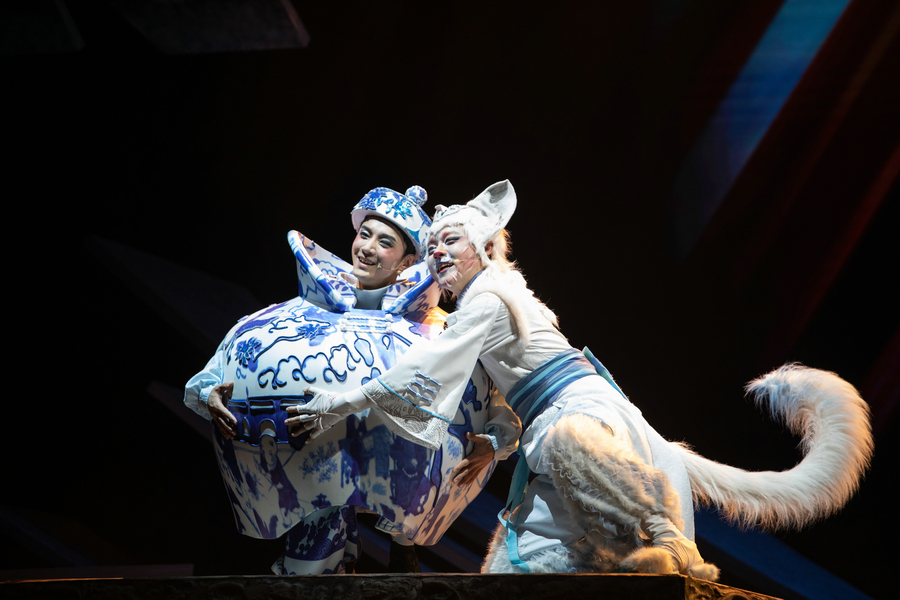
The Cat God in the Forbidden City
Introduction
"The Cat God in the Forbidden City" is an innovative children's play that has captured the hearts of audiences in Beijing.
The play made its debut at the Tianqiao Performing Arts Centre in Beijing in December 2023. This immersive theatrical experience is particularly designed for children, with actors portraying various cat characters who serve as the special guardians of the Forbidden City.
The inspiration for this play stems from a children's book of the same title by Feng Li. It not only creates a fantastical narrative centered around cats but also provides young audiences with an understanding of the rich history of the Forbidden City.
Notably, this production is a collaborative effort between the China National Theater for Children and the Palace Museum. By presenting the story from the perspective of a cat, the play weaves a heartwarming tale of friendship, memory and the passage of time. This artistic endeavor aims to celebrate and promote the Forbidden City, an icon of traditional Chinese culture, to a global audience.
Mythology and Cultural Significance
Origin of the Cat God
The concept of the Cat God, as portrayed in "The Cat God in the Forbidden City", originates from the rich tapestry of Chinese folklore and mythology. While not a traditional deity found in ancient Chinese religious texts, the idea of a protective feline spirit aligns with various cultural beliefs surrounding animals as guardians or symbols of fortune. In Chinese culture, cats have often been seen as symbols of luck and are appreciated for their role in safeguarding their human companions from pests and offering companionship.
The narrative in the play draws from these cultural motifs, presenting a fictional storyline about a kitten named Baby. This character's journey through time and space to the present-day Palace Museum is emblematic of the enduring bond between humans and cats. As Baby reunites with old friends—represented by cultural relics within the museum—he becomes a guardian figure, echoing the protective qualities often attributed to spiritual beings in Chinese folklore.
Role in Chinese Folklore
Within Chinese folklore, animals frequently play roles as magical beings or spirits that influence human affairs. Cats, while not as commonly featured as some other animals, still hold a place in the tapestry of mythological narratives. They are often seen as creatures that bring good fortune or ward off evil spirits. This perception is partly due to their nocturnal nature and mysterious demeanor, which lend themselves well to tales of supernatural guardianship.
"The Cat God in the Forbidden City" taps into these cultural perceptions by presenting its feline characters as the protectors of one of China's most important historical landmarks. Through engaging storytelling and vivid characterization, the play brings to life the idea of cats serving not only as companions but also as sentinels of cultural heritage.
The Cat God in the Forbidden City
Symbolism and Representation
In "The Cat God in the Forbidden City", symbolism plays a crucial role in conveying the thematic elements of the story. The figure of the Cat God serves as a metaphor for the preservation and protection of cultural history. By transforming the museum's feline residents into sentient beings with the ability to interact with historical artifacts, the play brings to life the connection between the past and present.
The cats symbolize the guardianship of cultural relics, standing as both protectors and storytellers. This representation is particularly poignant in the setting of the Forbidden City, a place rich with history and tradition. The cats' interactions with the relics and their human companions reflect the ongoing relationship between history and contemporary society, emphasizing the importance of safeguarding cultural heritage for future generations.








